Running Injury-Free: A Kelowna Chiropractor's Marathon Lessons
Jun 24, 2026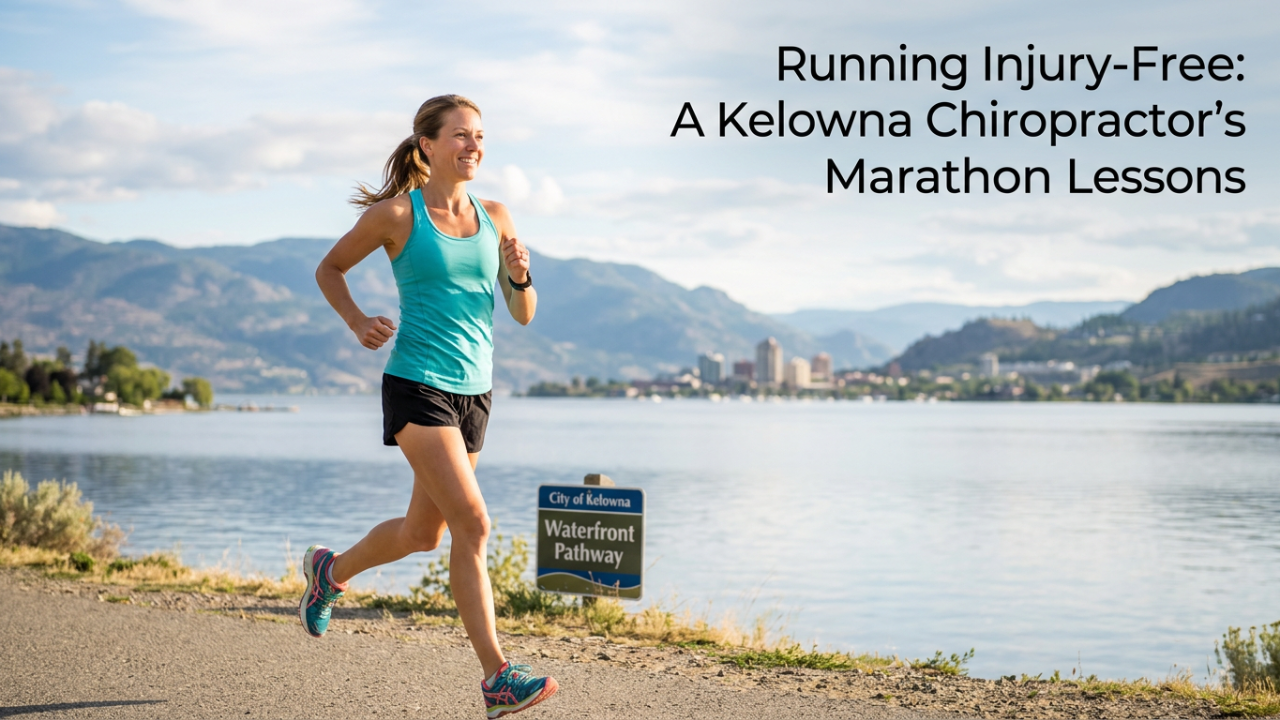
There's a particular kind of humility that comes from telling people how to care for their bodies for a living, and then discovering—mile by mile—how hard it is to take care of your own. This November, I'm running the Athens Marathon, and the training has taught me more about running injury prevention than two decades in practice ever did. If you're a runner in Kelowna (or anywhere) who wants to log miles without breaking down, this one's for you.
Why a chiropractor decided to train for a marathon
The seed was planted decades ago. Back in my twenties, I had a roommate who ran—seriously, not casually. He'd come back from long weekend runs looking wrung out and somehow thrilled, and I remember thinking, with equal parts admiration and judgment, that he was a little unhinged. Who chooses that?
But something stuck. The idea that the body could be trained into doing something that initially seems impossible lodged itself in my brain and never left. Years went by. I built a chiropractic practice, spending my days helping people move better, recover from injuries, and understand that the human body is far more adaptable than most of us give it credit for. And the whole time, in the back of my mind, was that roommate and his ridiculous, enviable long runs.
So this is partly his fault. I hope he reads this.
The patient becomes the patient
Here's what's strange about being a chiropractor who decides to train for a marathon: I know exactly what's supposed to happen, and that knowledge doesn't make the doing any easier.
I can tell a patient precisely why their IT band is screaming, why their hips are tight, why they need to strengthen their posterior chain before piling on mileage. I've said these things hundreds of times. But standing in my own kitchen at 5:30 a.m., staring at running shoes, knowing the right thing and wanting to do the right thing turn out to be very different muscles.
The biggest challenge hasn't been any single injury. It's been building a repeatable rhythm that does three things at once: builds the muscle to protect my joints, develops speed and endurance for the distance, and prepares my legs specifically for hills. The Athens route climbs from roughly mile 10 to mile 19—one of the hilliest major marathons in the world. Athens doesn't reward people who only trained on flat ground. Neither does life, honestly.
4 running injury prevention tips that actually work
Most of what's made the difference are the same things I'd tell any patient walking into my Kelowna clinic. If you take nothing else from this article, take these.
- Strength first, mileage second. I resisted this because I wanted to run, not lift. But running long distances on an underbuilt frame is how you end up injured. Two strength sessions a week—squats, deadlifts, single-leg work, core—have done more for my running than any amount of extra miles. Your joints are only as safe as the muscles holding them in position.
- Hills are a skill, not just suffering. I now seek out inclines on purpose. Hill repeats teach your body a different gear and build exactly the strength a tough course demands. The first time I ran a serious hill workout I felt like I'd been hit by a car. Now I almost look forward to them. Almost.
- Consistency beats intensity. The single most important factor has been showing up regularly, even when the session is short or unimpressive. The body adapts to what you do often, not what you do occasionally and dramatically. A boring four-mile run done faithfully every week beats a heroic long run followed by a week of nothing.
- Eat to build, not just to shrink. This one humbled me. You can't starve your way to a stronger body. Fueling for performance means eating enough protein to actually build the muscle you're training, while being thoughtful enough that the weight trends the right way. It's slower and less dramatic than crash dieting—and it actually works.
What the body keeps teaching me
Every patient I've ever treated has heard some version of this: the body wants to adapt. It's designed to. Give it the right stress, the right recovery, and enough patience, and it will reshape itself around the demands you place on it. I've believed that professionally for years. Now I'm living it, and it lands differently when it's your own legs carrying you up a hill you weren't sure you could climb.
There's a lesson in there for anyone facing something that feels too big—a fitness goal, a recovery, a change they've been putting off for years. You don't have to be ready. You just have to start showing up, consistently, and let the body do what it's built to do.
See you in Athens
I'm not fast. I'm not going to win anything. But in November I'm going to stand at the start line of the oldest marathon route on earth, in the place the whole idea was born, and run the same direction that messenger ran twenty-five centuries ago.
If you've been sitting on a goal like this—running or otherwise—and your body is the thing standing in the way, let's fix that together. Helping people move toward the things they want to do is the entire point of what I do.
Ready to run stronger and stay injury-free?
Book an assessment at Tutt Street Family Chiropractic in Kelowna and let's build a plan that keeps you moving toward your goals.
📞 Call: 250-486-0062
🌐 Visit: www.tuttstreetfamilychiropractic.com
Ready to achieve your personal and professional goals? Contact us today to book your free consultation and start your journey!
Stay connected with news and updates!
Join our mailing list to receive the latest news and updates from our team.
Don't worry, your information will not be shared.
We hate SPAM. We will never sell your information, for any reason.
